
Screen and Recoat or Full Refinish? How to Tell Which Your Floor Needs
By Andy Maxey ·
A lot of people call me thinking they need their floors completely redone, when what they really need is a screen and recoat. And every so often it’s the other way around! The two jobs look similar from the outside but they’re very different, so here’s how I explain it.
What’s the difference?
A full refinish means sanding the floor all the way down to bare wood, filling, fine sanding, buffing, and then putting new finish on. (I walk through every step of that in this article.) It takes care of just about everything, but it takes the most time and removes a little bit of wood every time it’s done.
A screen and recoat doesn’t touch the wood at all. I buff the existing finish with a fine screen to rough it up just enough for new finish to grab onto, clean the floor really well, and put down a fresh coat or two. Think of it like repainting a wall that’s in good shape. You’re not stripping it, you’re just giving it a new top layer.
When a recoat is enough
A recoat works when the finish is worn but the wood underneath is still protected. Signs your floor is a good candidate:
- The floor looks dull or hazy, especially in the walkways
- There are light surface scratches in the finish that haven’t reached the wood
- The color still looks right to you
- The floor was finished with polyurethane in the last several years
Here’s a quick test you can do yourself: put a few drops of water on a worn spot. If the water beads up and sits there, there’s still finish protecting the wood. If it soaks in and darkens the wood in a minute or two, the finish is worn through in that spot.
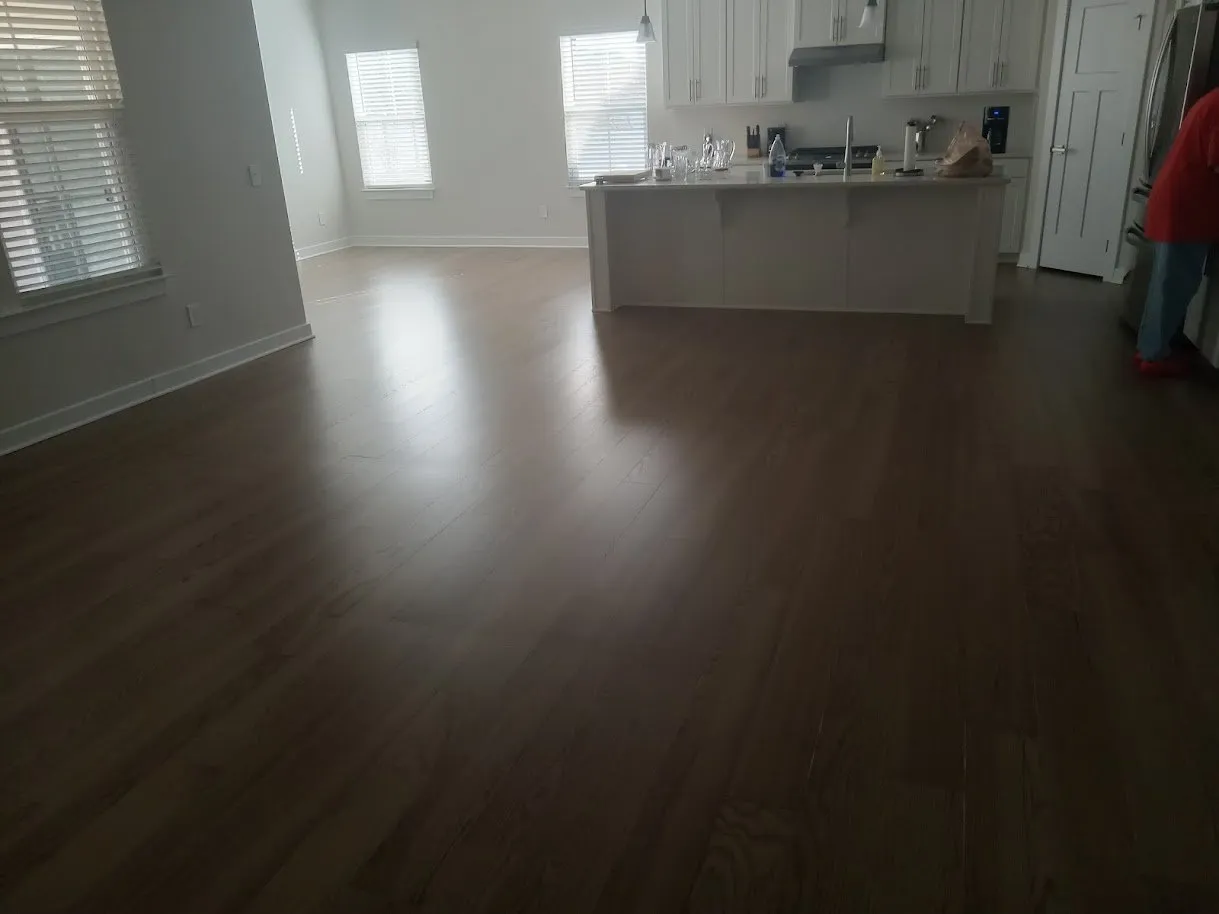
The Hubbard job is a good example. It was an engineered floor that had lost its shine but was otherwise in great shape. A recoat with Bona Traffic in satin and it looked better than ever!!
When it’s time for a full refinish
A recoat can’t fix problems that are in the wood. You’ll need a full sand if you have:
- Bare, gray, or dark spots where the finish wore off and the wood got dirty or wet
- Scratches or dents deep enough to catch a fingernail
- Water damage, stains, or boards that need to be replaced (those get woven in first, then the whole floor gets sanded so the new boards blend in)
- Cupped or uneven boards
- A color you want to change. You can’t restain a floor without taking it down to bare wood.
The one thing that can rule out a recoat
Cleaning products. A lot of “shine restoring” floor polishes and mop-on products leave a film on the floor, and new finish won’t bond to it. If a recoat goes on over that film, it can peel or flake later on. If you’ve used any kind of polish or wax on your floors, tell whoever’s doing the work! Sometimes it can be cleaned off well enough to recoat, and sometimes the only safe option is to sand.
Going forward, a damp mop with a cleaner made for polyurethane-finished floors is all a hardwood floor needs.
Why it’s worth catching early
Every full sand takes a little wood off the top of the floor. Solid hardwood can handle a good number of sandings over its life, but engineered flooring only has a thin layer of real wood on top, so it might only get one or two.
That’s why I like recoats! If you recoat a floor before the finish wears through, you can put off a full sanding for a long time. In a busy house, keeping an eye on the walkways and the area in front of the kitchen sink every few years can save the floor a lot of wear.
Not sure which one you need?
It’s not always obvious, even for me until I see the floor in person. If you’re not sure, send me a message with a few photos of the worn areas and I’ll tell you honestly which way I’d go.