
Water-Based vs. Oil-Based Floor Finish: What I Use and Why
By Andy Maxey ·
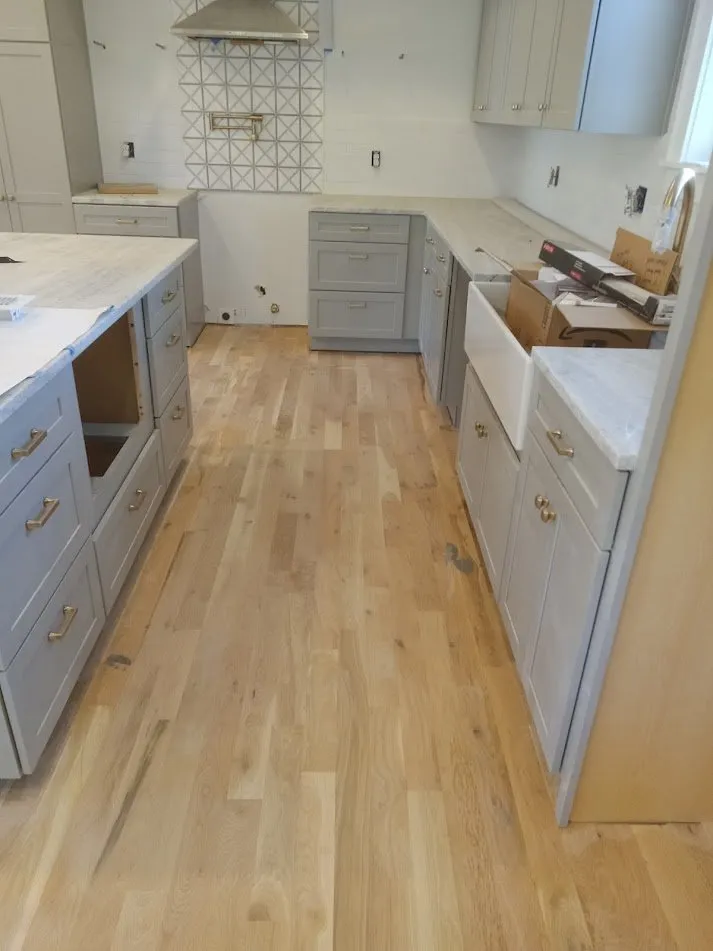
One of the first questions I get on most jobs is “what kind of finish are you going to use?” It’s a good question, because the finish decides how the floor looks, how long you’re out of the room, and how well it holds up. Here’s how the two main types compare.
Oil-based polyurethane
This is the finish a lot of older floors around here have on them. It’s been around forever and it does a good job.
- Color: It goes on with a warm, amber tone, and it keeps getting more amber as it ages. On red oak that can look really nice and rich. On white oak or a light floor, it can turn it yellow over time.
- Dry time: Slow. Each coat usually needs to dry overnight, so a full job takes longer and you’re out of the space longer.
- Smell: Strong. It gives off a lot of fumes while it dries, and most people don’t want to stay in the house during it.
Water-based polyurethane
This is what I use on most of my jobs.
- Color: It dries clear and stays clear. What you see the day it’s done is what it’ll look like years from now. If you want a natural, light floor, this is the way to go.
- Dry time: Fast. Coats are usually ready for the next one in a few hours, so a floor can often be sealed and finished in a single day.
- Smell: Very low. It’s low-VOC, which is a big reason why, in most cases, families and pets can stay home while I work.
What about durability?
This is where a lot of people get stuck, because years ago oil-based really was tougher. That’s not the case anymore! The professional water-based finishes made today, like Bona Traffic HD, use a hardener that’s mixed in right before it goes down. They hold up to kids, dogs, and kitchen traffic as well as anything I’ve used. The cheap water-based stuff from the hardware store is a different story, so if you’re comparing, make sure you’re comparing professional products.
Getting the warm look without the yellowing
One thing people sometimes miss with water-based is the warmth. Because it’s so clear, a floor can look a little flat or “raw” if you’re used to the amber look. There are a couple of ways around that:
- A sealer coat that brings out the grain and adds a little warmth before the topcoats go on. On the downtown Greenville job, the white oak got a natural seal and then two coats of satin.
- A stain, if you want real color. Water-based finishes go over stain just fine.
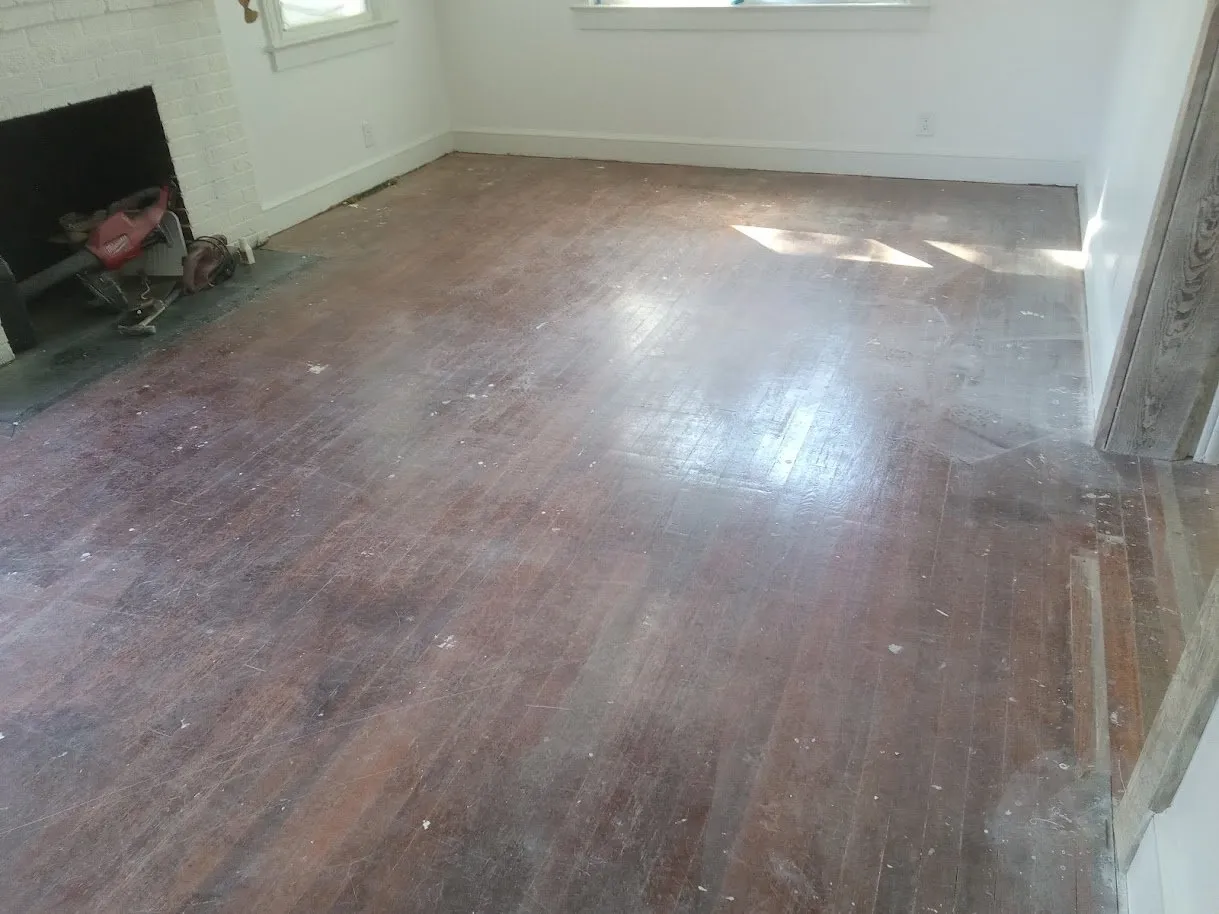
That old cherry-red floor above is a good example of the opposite problem. Between the stain and years of amber finish, the white oak underneath was completely hidden. On Jamie’s job we sanded it all back to bare wood and refinished it natural. A clear finish keeps it that way.
Sheen
This is separate from the type of finish, but people ask at the same time. Finishes come in different sheens, from matte up to gloss. I usually steer people toward satin or matte. They hide everyday scratches and dust much better than gloss, and they look more like real wood. Gloss looks great the day it’s done but shows everything!
So which should you pick?
For most homes, I recommend a good professional water-based finish. It looks natural, stays that color, dries fast, doesn’t stink up the house, and holds up. If you love that deep amber look on a red oak floor, oil-based is still a fine choice. We can talk about it.
If you have questions about the finish on your floors, or you’re trying to decide what to use, send me a message. I’m happy to help.